01
Football, Food and the Culture of Shared Entertainment
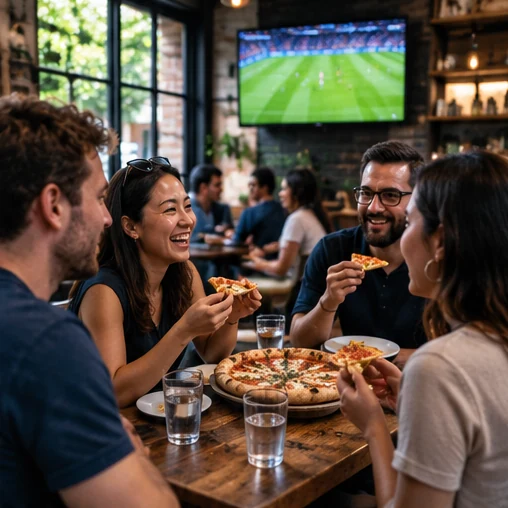
A football match can become a social occasion when people gather around a shared screen. Food, conversation and familiar rituals help turn spectatorship into a…
Read article →Explore the social traditions, card games and technologies that shape how people spend their leisure time.
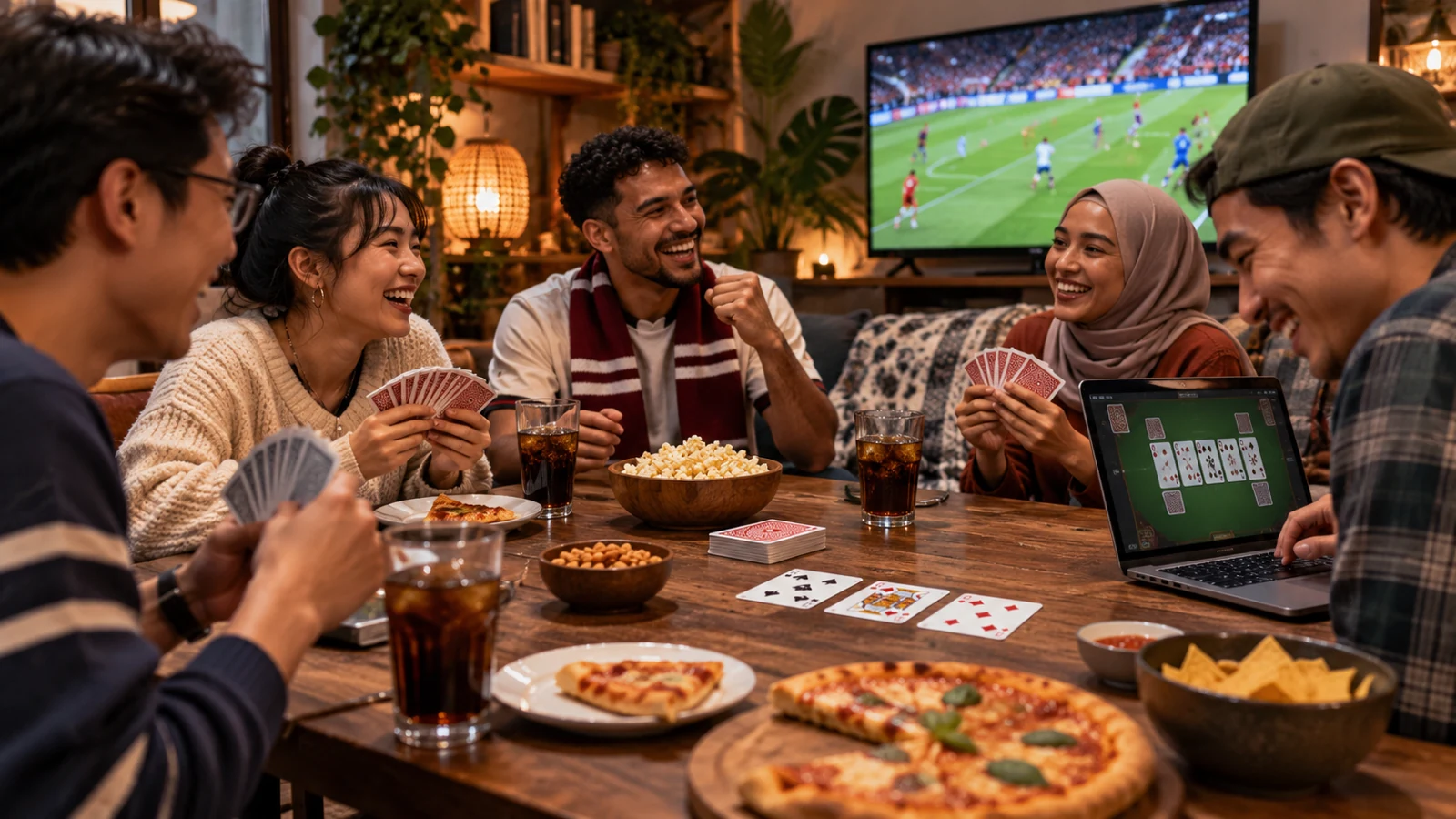
A football match can become a social occasion when people gather around a shared screen. Food, conversation and familiar rituals help turn spectatorship into a…
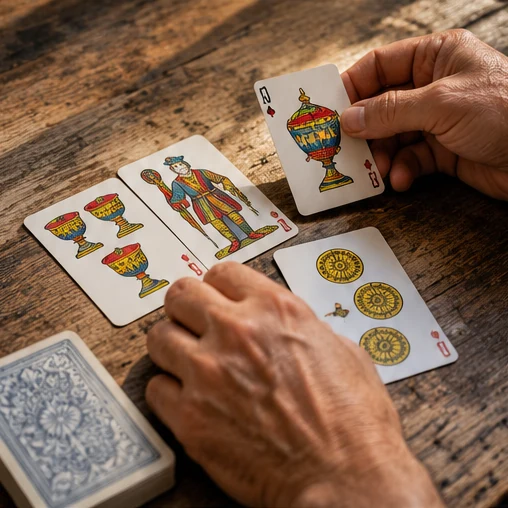
Read article →Playing cards are portable objects that support many different rules and styles of interaction. Across communities, people have adapted decks to local customs and preferences.Rules…
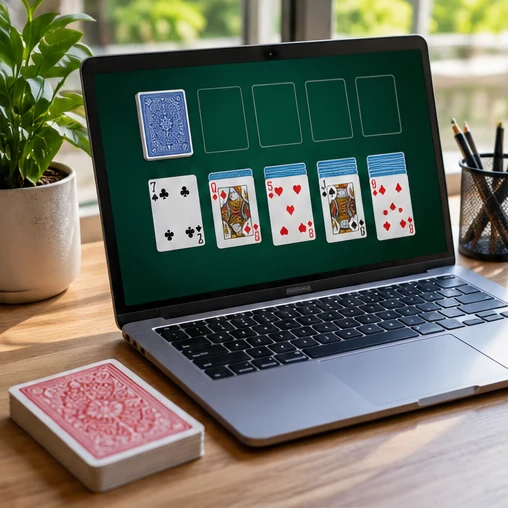
Read article →Software can represent a deck of cards through images, state and rules. The transition changes how a player receives feedback and how a game handles…
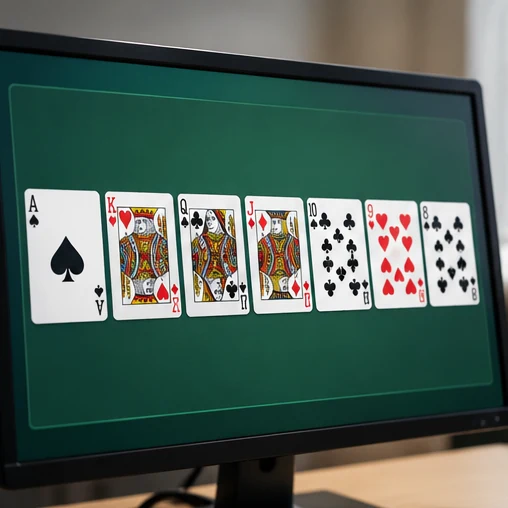
Read article →Bola Tangkas is a poker-inspired gambling game associated with Indonesia. It uses card combinations rather than the physical ball suggested by its name. Implementations and…
Read article →Modern browsers support interactive graphics, audio and responsive layouts through standard web technologies. A card game can use these capabilities to present rules and state…
Read article →Article illustrations are AI-generated and are not documentary photographs or screenshots of actual gambling services.
Across different societies, leisure has always been closely connected to the places where people gather. Restaurants, cafés, community halls and neighborhood meeting places provide more than food or refreshments. They create environments in which conversations develop, traditions are exchanged and shared interests become part of everyday life.
A football match watched over dinner, an afternoon spent playing cards with friends and a traditional game adapted for a digital screen may appear to belong to different worlds. Yet each reflects a common cultural tendency: people seek entertainment that allows them to participate, interact and develop a sense of familiarity.
Understanding this relationship offers a broader perspective on how traditional forms of recreation have evolved into modern interactive entertainment.
Food has long played an important role in bringing communities together. Meals provide a natural setting for conversation, storytelling and the exchange of cultural traditions. In many societies, gathering around a table is as much a social activity as a culinary experience.
Italian dining culture provides a particularly interesting example. The neighborhood café and pizzeria can serve as informal meeting places where people discuss everyday events, celebrate important occasions and share their enthusiasm for football.
Historical accounts of Ribalta in New York illustrate this relationship between Neapolitan cuisine, Italian football and community life. The independent Ribalta Historical Archive’s football and culture feature discusses the social experiences associated with gathering around a shared table and watching a match together.
Such gatherings demonstrate that entertainment is not always an isolated activity. It can emerge naturally from the relationships people establish through food, conversation and common interests.
Football represents one of the most recognizable forms of collective entertainment. Its appeal extends beyond the physical competition taking place on the field.
Supporters develop knowledge of teams, players, tactics and sporting traditions. They exchange opinions, discuss decisions and interpret the events unfolding during a match. Restaurants and cafés often become gathering places where these discussions form part of the experience.
The social dimension of football reveals an important distinction between simply observing entertainment and actively engaging with it. Although spectators do not control the outcome of a match, their knowledge and emotional involvement influence how they experience it.
This desire for participation also appears in other recreational traditions, particularly games that involve decision-making, memory and interaction between participants. Read more about football and shared cultural experiences in our accompanying essay.
The table occupies an important position in the history of recreation. It provides a shared physical space where people can enjoy meals, discuss ideas and participate in games.
Traditional board games and card games have benefited from this simple arrangement. Unlike many forms of entertainment requiring specialized equipment, a deck of cards can be carried easily and used in a wide variety of social environments.
Across Europe and Asia, communities have developed their own approaches to card-based recreation. Italian games such as Scopa and Briscola demonstrate how familiar objects can support distinctive rules, cultural traditions and styles of participation.
Some games emphasize memory, while others require tactical decisions, cooperation or an understanding of probabilities. Their appeal often comes from the combination of established rules and the unpredictable situations that emerge during play.
These traditions remain relevant because they illustrate how entertainment can involve both social interaction and intellectual engagement.
Games involving meaningful decisions offer a different experience from purely passive entertainment. Participants must interpret information, understand rules and consider the consequences of their actions.
Chess provides a clear example of a game dominated by strategic decision-making. Other recreational games combine elements of skill with varying degrees of uncertainty.
Traditional card games occupy a particularly diverse position within this landscape. Depending on the rules, participants may rely on memory, communication, probability assessment or tactical judgment.
However, the presence of decision-making does not mean that every game is primarily skill-based. Some card-based formats depend heavily on random outcomes, and gambling games must be distinguished from recreational competitions in which skill determines performance more directly.
Understanding these differences is essential when examining the evolution of interactive entertainment.
Playing cards demonstrate how a recreational concept can travel between communities while developing distinctive local characteristics.
Different regions have adopted different deck designs, scoring systems and rules. Some traditions emphasize partnerships, while others focus on individual competition or the recognition of particular card combinations.
The cultural significance of playing cards extends beyond the rules themselves. Games can become associated with family gatherings, cafés, holidays and other recurring social occasions.
As people move between countries, recreational traditions can travel with them. Existing games may acquire new variations, while unfamiliar formats can become part of local entertainment culture.
This adaptability helps explain why card-based entertainment has remained recognizable despite substantial changes in technology and everyday life. Explore our social history of traditional card games for further context.
The development of personal computers introduced new possibilities for representing traditional games.
Physical cards could be recreated as graphical objects, while software could manage dealing, rule enforcement and the presentation of information. Actions that once required manual coordination could be performed automatically.
These changes did not eliminate the importance of game design. Instead, they introduced new questions about accessibility, visual clarity and interaction.
Developers had to consider how players would recognize card values, understand available actions and receive feedback from the interface. A familiar physical activity needed to be translated into a new technological environment.
The emergence of browser-based entertainment subsequently made digital games accessible across a wider range of devices. Improvements in web standards allowed developers to create increasingly responsive interfaces without requiring every experience to depend on a separate desktop application. Our digital card games feature examines this transition in more detail.
Indonesia offers another example of how internationally recognizable card mechanics can acquire distinctive regional identities.
Bola Tangkas is a poker-inspired gambling format associated with Indonesian gaming culture. Its presentation revolves around playing cards and recognizable combinations rather than the physical ball suggested by its name.
Although it shares elements of card recognition with other poker-inspired formats, Bola Tangkas should not be treated as equivalent to competitive poker or traditional skill-based card games. Its outcomes depend substantially on chance, and familiarity with card combinations does not guarantee favorable results.
From a cultural and technological perspective, the format illustrates how familiar playing-card imagery can be adapted into a regional form of digital entertainment.
Its existence also highlights the importance of distinguishing recreational card games, competitive skill-based activities and gambling when discussing the broader history of play.
Smartphones have changed how people access entertainment. Activities previously associated with particular locations or dedicated computers can now be experienced through portable devices.
For digital card games, this transition has encouraged developers to simplify navigation, improve readability and reconsider how information is presented on smaller screens.
Responsive layouts, touch controls and lightweight graphical interfaces have become important components of modern game design. Our article on browser-based entertainment technology looks at these design choices.
Nevertheless, accessibility introduces responsibilities. Digital entertainment should communicate its rules clearly and distinguish ordinary recreational participation from activities involving financial risk.
Good interface design is not simply about making entertainment more convenient. It is also about ensuring that users understand the nature of the experience and the consequences of their decisions.
Technology has transformed the environments in which people experience entertainment, but many underlying social motivations remain recognizable.
People continue to appreciate shared experiences, familiar traditions, intellectual challenges and opportunities for recreation. Physical gathering places and digital platforms offer different ways of satisfying these interests.
A neighborhood restaurant where football supporters gather represents one aspect of this cultural landscape. Traditional card games represent another. Browser-based entertainment demonstrates how some recreational concepts can be translated into contemporary technological environments.
These activities do not share a single historical origin, nor do they necessarily involve the same audiences. Their relationship lies in the broader human tendency to develop meaningful leisure experiences around familiar cultural practices.
At Play Culture Journal, we explore the relationship between traditional recreation, cultural history and technological change.
Our editorial coverage examines how games develop, how communities establish recreational traditions and how digital interfaces influence the experience of participation.
By considering food culture, football, traditional card games and modern interactive entertainment within a broader cultural framework, we can better understand both the continuity and the differences between these activities.
Play remains an important part of culture, whether experienced around a dining table, through a traditional deck of cards or on a contemporary digital screen. Understanding its many forms requires attention to history, social context, technology and the distinction between skill and chance.